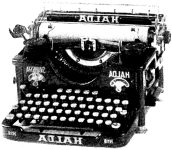
Kevin Kelly asks If programmers did not program ChatGPT with logical deduction skills, where does the intelligence in its models come from? He hypothesizes that It is the architecture of language that conveys the intelligence.
I have another idea: our intelligence is the language, and that’s been hidden in plain sight for centuries or more. Joan Didion wrote I don’t know what I think until I write it down. That’s often the case for me, too, and I wonder how many others. Some people speak rather than write, and discover what they think by discussing. When we’re trying to figure out what exactly this “intelligence” or “consciousness” is that we claim to have, we tend to think about things happening inside our brains. “Think, then express” is the way we claim it works.
But I’m going to suggest that it does not work that way at all. Our thinking, our intelligence, our very consciousness exists in the words. A writer is a world trapped in a person, according to Umberto Eco. Maybe George Orwell was making a bigger point than anybody thought when he said If people cannot write well, they cannot think well. If you aren’t writing (or expressing verbally), maybe you’re not actually thinking. Maybe the thinking is not synapses firing in your head. Maybe the thinking is the words, and when you write them, the thinking — and here I literally mean the intelligence — lives outside your head.
Words certainly affect the world. Writers do not merely reflect and interpret life, they inform and shape life, according to E.B. White. Maybe it’s not the writers themselves, but their writings. Their words.
An idea that stretches back past antiquity is magic words. “Open sesame,” “abra-cadabra,” “wingardium leviosa” are all words that, in stories, shape and change the world. Humans have believed in them and told stories about them for longer than anyone knows. Daniel O’Keefe suggests in Stolen Lightning that these ideas go back to the paleolithic age.
When Anthropic, OpenAI, et. al. trained their foundation models, they fed in not just Amazon pages about products and scam artists’ phony claims, but also the best words by the best writers. Passages that have their own beauty.
Eventually, all things merge into one, and a river runs through it. The river was cut by the world’s great flood and runs over rocks from the basement of time. On some of the rocks are timeless raindrops. Under the rocks are the words, and some of the words are theirs. I am haunted by waters.
– Norman Maclean, A River Runs Through It
Not from the stars do I my judgement pluck;
And yet methinks I have Astronomy,
But not to tell of good or evil luck,
Of plagues, of dearths, or seasons’ quality;
Nor can I fortune to brief minutes tell,
Pointing to each his thunder, rain and wind,
Or say with princes if it shall go well
By oft predict that I in heaven find:
But from thine eyes my knowledge I derive,
And, constant stars, in them I read such art
As truth and beauty shall together thrive,
If from thyself, to store thou wouldst convert;
Or else of thee this I prognosticate:
Thy end is truth’s and beauty’s doom and date.
– William Shakespeare, Sonnet 14
How happy I was if I could forget
To remember how sad I am
Would be an easy adversity
But the recollecting of Bloom
Keeps making November difficult
Till I who was almost bold
Lose my way like a little Child
And perish of the cold.
–Emily Dickinson, How Happy I was if I Could Forget
Large language models are huge documents containing countless words written by people, and processed with complex statistics. There are thoughtless words, persuasive words, and also words embodying the deepest and most considered thoughts. The words are the thoughts. The huge documents are the latest, most complete assembly of human consciousness. The words are our intelligence. They’re magic. That’s where the intelligence comes from. We put it there.
