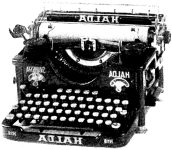
Over the centuries of printed and broadcast media, a system emerged that put intermediaries between the original writers and us, the receivers. Editors and publishers reviewed, improved, or rejected a piece of work before publishing. Whole professions arose whose focus was establishing and enforcing standards. To be published or aired, a piece of content had to satisfy those standards or it would be filtered out, just like water treatment systems filter out contaminants.
Maybe the main reason to create filters was economic. Printing cost money, and it was typically not the author’s money; it was the publisher’s. If you were paying to print a book, you’d want to make sure it would appeal to buyers by being interesting and a quality product to bolster reputations — the author’s and the publisher’s. But what to have the quality control system focus on?
There are a lot of things that contribute to quality of a piece of media. Many are hard to describe, like what makes one writer’s prose “better” than another’s. But some are simple, like truth. Readers want to have confidence that an article recommending a particular soap, bicycle, or medicine presents an honest assessment of the product.
You want that honesty because, as everybody has known for even longer than printing has existed, there are people who will try to cheat you by trying to convince you to buy something that turns out not to be what they claim. For some sellers, the product is important, as is their reputation. But for others, it’s only the money. This is a truth old enough and pervasive enough that you can find it everywhere in the English language (and probably other languages too; I only know English). Words like scam, con, fraud, deceit, graft, hoax, racket, swindle…there are a lot of these words. Sometimes the fraudsters were trying to get your money. But sometimes they were after something else: your beliefs.
The media filtration system adapted by adding fact checkers, and in the case of commercial products, independent testing. Entire publications like Consumer Reports did nothing but their own independent testing and reporting. In the case of beliefs, it was more complicated. Politicians, who often have exactly the same glib, self-assured style as salesmen, refer to real events that could be fact-checked, but it’s not as clear-cut as “this laundry soap does or does not remove grease stains.” A political argument is often about a chain of reasoning, and involves collective human behavior and time spans of years or more. Fact checking can only go so far when the facts themselves may be correct but different people can still interpret them different ways. In the 1930s, the phrase “America First” was used to argue against getting involved in European conflicts — but was also used by the Ku Klux Klan to further their racism and xenophobia.
The media filtration system, not to mention society in general, adapted through reputation. Back in the golden era of newspapers, when every city had several, there was often what we would call a “liberal” paper and a “conservative” one. They might report the facts of the news in about the same way, but interpret the meaning of those facts differently. They would support politicians they agreed with and object to the ones they didn’t. “Object to” is being polite; newspaper rivalries could get intense. But the “media system” still included filtration. The average person could submit a “letter to the editor” in the hope of airing their own personal slant, but there was still a vetting system in place. Not every letter got printed.
Things have changed. Nowadays anybody can have as many online accounts as they want and post as often as they can manage. It’s pretty easy to set up bots that keep posting constantly. The idea of reputation still exists, but now more of the work is on us, individually. It’s Yet Another Job We Have To Do. Not that ordinary folks didn’t have to choose their newspapers, magazines, and TV networks back in the day, but now there are thousands of choices. Probably more.
There are technical tools that help to a degree. Just taking email as an example, obvious spam gets filtered out, and automatic sorting keeps separate categories for sales pitches, messages from services I actually use, and from people I really want to communicate with. But it still takes work.
It’s like that in other areas too. I get unsolicited text messages and phone calls about sales or politics. I read some online news sources that actually do seem to have some degree of filtering in place, but those filters don’t seem to be as reliable as they were in the past. And the vast number of links, sources, and sites feels…vast.
This is why it all seems exhausting these days. At the same time that ordinary people are earning, effectively, less money, we all now have more work to do. More clamor from people off at the undesirable end of the antisocial spectrum; scammers, fraudsters, and worse. They know the filters are gone. And the scale of the problem means consequences are mostly gone too. Even if you can find a mysterious grifter from another country, what can you do about it?
I’m less and less convinced that the internet has been a good idea. I like being able to look up information instantly, I do a lot online. My own work, I hope, is more informed because of the internet. More authors can find an audience, and the “news cycle” reacts much more quickly. But I worry that we’re swimming in an ocean of information that, on the average, is like the real-life ocean. It has its dangers. Unfiltered, you can’t drink it.
