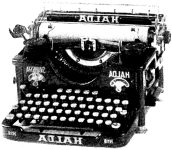
Not for the first time, I have launched a newsletter, piggybacking on the Substack platform. The guiding question, or perhaps lament, driving this effort is what are we to do? That applies to a great many areas these days, but my concern is around artificial intelligence, its oppressive and sudden domination of practically everything to do with technology in general, and its potential (and strongly hyped) impact on our society and economy.
Freud identified great humiliations historically suffered by humanity. We believed we were the center of creation until astronomers pointed out that is not the case. We believed we were the pinnacle of species until the study of evolution pointed out that is not the case. We believed we were the masters of our own minds until Freud himself pointed out that is not the case, either. Freud is no longer around to observe a fourth humiliation, being experienced right now. We believed ourselves to be the predominant intelligence on earth, until the latest version of artificial intelligence seems to be pointing out even that is not the case.
Has anything really changed, or does it just feel that way? And if our world really has changed as fundamentally as many commentators breathlessly intone, what are we supposed to do about it?
Has anything really changed?
I don’t know for sure (and neither does anybody else), but I’m pretty confident that even if there are basic changes in the works, none of those changes are as significant as we’re being led to believe by media reports, which too often are simply regurgitations of expert salesmanship by the people in positions to make metric tons of cash from what they tell us are the agents of those changes — which is to say, agents. AI agents, to be specific.
AI agents work faster than we can. But of course they can; they’re computers. I can’t write an essay faster than ChatGPT…but I already couldn’t do arithmetic faster than a $5 calculator. I already couldn’t copy a set of pages faster or even as accurately as a photocopier. I can’t run as fast as a car, can’t fly at any speed, and can’t lift a weight that’s trivial for a construction crane.
There is nothing remotely new about this situation. It was Archimedes who pointed out almost three thousand years ago that he couldn’t move an enormous weight (the entire earth, in his example) by himself, but he could if he had a machine — he was talking about a lever; as simple a machine as you can find.
That leads us wonder whether there is something different about these new machines that makes them different from all the other machines people have been making and using forever. The expert salesmanship we’re swimming in would have us believe yes, this is something completely different. But wait…I can remember a whole bunch of times when expert sales pitches said that. I don’t know how many gadgets, appliances, tools, bottles of glop, newly formulated food-like materials, and even the same old stuff in a new package was going to transform my life. None of it happened.
Córy Doctorow just recently observed that if all the AI vendors disappeared tomorrow…nothing would change. There are no systems, software or not, that would cease to function without ChatGPT or Claude or any of them. Compare that to what would happen if we had a general failure of the very dull, old-technology, not-shiny-at-all databases and networks that enable processing the world’s credit card transactions. And those systems have been around for decades; nobody is worried about them turning us all into paper clips.
But jobs…what about jobs?
Yeah, I hear you on this one; I myself am newly unemployed and I’m pretty sure it’s partly because of AI. Indirectly, though. My former company didn’t replace me (and my department) with AI. But they’re racing to implement AI, which is bloody expensive, so they’re “reallocating resources.” That’s where our jobs went. Into the resource shredder, probably to turned into accounts payable to the AI vendors. This is a guess, but not just by me, and it seems to add up.
And the job market, which I’m unexpectedly reacquainted with, seems pretty bad. That’s not entirely due to AI, of course; there are a lot of moving parts. But AI is definitely not helping. Young people entering, or even thinking about entering careers, are reportedly very anxious about AI and what it will mean for their futures. The expert salesmanship we swim in already includes warnings about all jobs (for humans) disappearing.
If you do the thought experiment where you visualize every single job being automated away, it quickly falls apart. Programming computers is a job that’s easy to imagine being automated (as long as you don’t know a lot about it), and answering customer-service phone calls is already pretty automated. Except the automation often amounts to nothing more than somewhat more interactive hold music before you finally might solve your problem, which is usually where people get involved. But then you start thinking about other kinds of jobs. Lawn care, for one. There are already “robot mowers” that seem to work, at least to some extent, as long as your lawn is comfortably level, contiguous, and contains normal grass. But I live on a sloping lot, and my yard is divided into several smaller grassed areas separated by stairs. So what, I have to buy four robot mowers? Then there are all the trades, where people with years of experience and process knowledge encounter situations and problems that can be completely unique and require on-site perception, problem-solving, and adaptation. Sure, humanoid robots, right? How much do those gadgets cost? Have you actually seen one try to cope with a novel situation? Not even anything weird; how about a staircase built before modern building codes, so it’s nonstandard?
I’m not saying it’s impossible to come up with robotic automation driven by AI that might be able to do some of those jobs. I’m saying two things: we are nowhere close to that, and who’s going to pay for it?
Okay, so then why do I feel so shitty about everything?
It’s because everything is getting enshittified, that’s why. But here’s the thing: we may not be the masters of our own minds, per Freud, but we’re not entirely powerless. And that’s what Artisanal Scribbles (my newsletter) is all about. It’s a dive into what to do as an authentic human to bolster your own integrity, deal with the spew of phony, enshittified content flooding us, and nurturing our own islands of authenticity. It’s ostensibly about writing, which is my measure of most things in life, but it’s not only about writing. It’s also free, although my plans include ramping up to a modest paid subscription level (did I mention being unemployed?). Heck, maybe I’ll even open an online merch store and sell hats. Please give it a try. Let me know what you think! And if you need a hat, go get one now. It’s going to be a long wait otherwise.
